Former Fellows-Now Staff
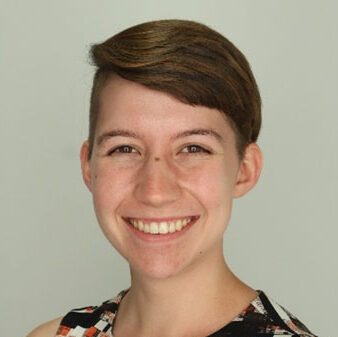
Kara Krogh
As an undergraduate in the Nuclear Science and Security Consortium at North Carolina State University, I had the opportunity to participate in an internship at ORNL during the summer of 2024. I worked in the Radiation Effects and Microstructure Analysis (REMA) Group with Dr. TS Byun on analyzing mechanical property data for additively manufactured stainless steel. This research allowed me to gain a deeper understanding of structural nuclear materials and the methods being used to improve them for use in advanced reactor systems. Throughout this internship I was also able to meet scientists both inside and outside of the group I worked in, which provided me with valuable insights into the range of research happening at ORNL. After receiving my BS in materials science and engineering in May of 2025, I returned to ORNL and the REMA group as a full-time technical professional. My focus in this position is micromechanical testing of irradiated materials for the support of a variety of projects.
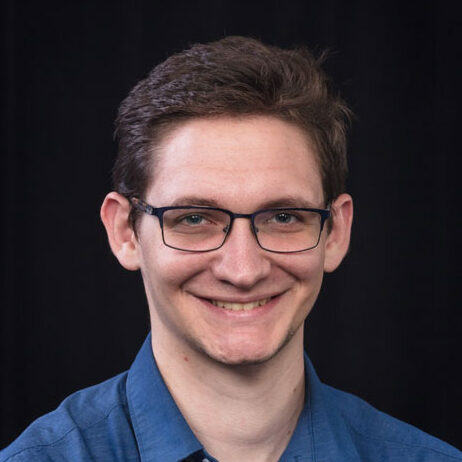
Matthew deJong
Matthew deJong – Former Consortium Fellow at North Carolina State University (PhD in Materials Science and Engineering; ORNL Postdoctoral Research Associate).
As a fellow of the Nuclear Science and Security Consortium at North Carolina State University (NCSU), I characterized additively manufactured materials and the powder feedstock used to make them using Transmission Electron Microscopy (TEM). My thesis focused on identifying the microstructural differences in powder produced through gas atomization reaction synthesis (GARS) and determining how variations in feedstock influences the microstructure of oxide dispersion strengthened (ODS) alloys produced through laser powder bed fusion.
Over the course of my fellowship, I had the privilege of interning at ORNL for two summers. In my first internship over the summer of 2023, I characterized ODS steel and GARS feedstock via TEM and learned how to characterize TEM lift-outs via Transmission Kikuchi Diffraction (TKD). I also gained experience printing samples via laser powder bed fusion. For my summer internship of 2024, I gained experience characterizing 316L parts via Electron Backscatter Diffraction (EBSD) and Scanning Electron Microscopy Energy Dispersive Spectroscopy (SEM-EDS) and characterized various 316L feedstock powder via TEM.
As a recent graduate from NCSU with a PhD in Materials Science and Engineering, I have started working at ORNL as a postdoctoral research associate in the Radiation Effects and Microstructure Analysis Group (REMAG). I continue to use the experience I gained as a fellow of the NSSC, expanding my expertise in the development of various reactor core materials for use in nuclear energy systems. My current work in REMAG involves characterizing the microstructure of yttrium hydrides, zirconium hydrides, zirconium alloys, and FeCrAl alloys for potential use as moderators, cladding, and hydrogen permeation barriers in nuclear reactors.

Jordan Stomps
I earned a doctoral degree at the University of Wisconsin‑Madison, where I studied nuclear engineering under Paul Wilson. I began my internship at ORNL in May 2022, developing and expanding my doctoral research. My research was supported by the NNSA Consortium for Enabling Technology and Innovation (ETI) under the Research Thrust Area for Computer and Engineering Sciences for Nonproliferation. My doctoral research utilized data collected under the NNSA NA‑22 MINOS project in collaborations with ORNL research scientists—Jared Johnson (venture lead) and Ken Dayman (team lead). Now, I am a nonproliferation data scientist in the Data Science and Engineering for Nonproliferation group at ORNL.
My research focuses on method for leveraging data that have limited or noisy attribution. In real-world scenarios, the high cost of contextual and ground truth information can make labeling sufficient data prohibitive. Using semi-supervised and few-shot machine learning techniques, I am designing methods that can increase the amount of high value, interpretable, and actionable information relevant to a range of nonproliferation missions. This ultimately leads to more informed decisions and resource efficiency based on nuclear monitoring.
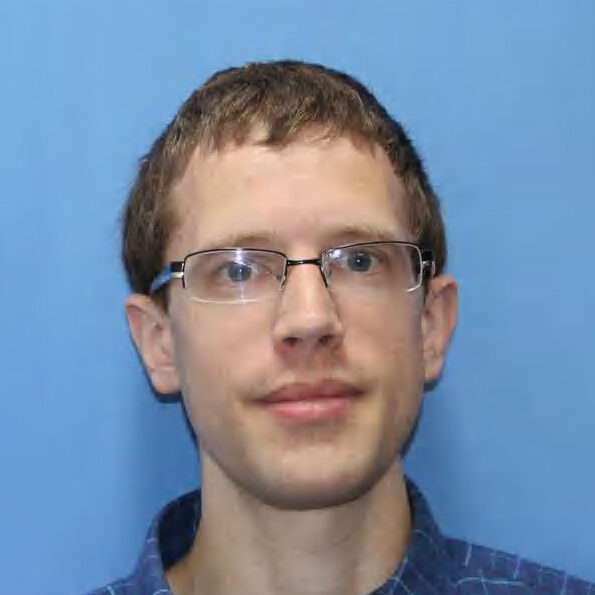
Matthew Krupcale
Former Consortium Fellow at University of Michigan – Ann Arbor (PhD in Nuclear Engineering and Radiological Sciences and Scientific Computing; ORNL R&D Staff).
I entered the world of nuclear engineering and nuclear nonproliferation as a Consortium for Verification Technology (CVT) graduate student fellow at the University of Michigan. During my time there, I was studying the atmospheric transport modeling (ATM) of radionuclides for treaty verification purposes, primarily focused on radioxenon emissions from weapons tests. My participation as a fellow provided the funding for my graduate research, allowing me to participate in summer internships at PNNL and LLNL as well as make presentations or posters at the CVT Workshops and at the DNN sponsored University and Industry Technical Interchange (UITI)/University Progress Review (UPR) meetings. This led to ORNL expressing interest in my work, which ultimately resulted in my postdoctoral research position in the Detonation Forensics and Response (DFR) group. Under this postdoctoral position, I became very familiar with the ATM implemented in the operational nuclear fallout modeling code DELFIC and wrote a detailed report on its Diffusive Transport Module (DTM) component. Furthermore, I reimplemented precipitation scavenging into the modern version of DELFIC based on the original Precipitation Scavenging Module (PSM) and wrote a report on this effort.
After completing my postdoctoral position, I was hired as an R&D Associate, where I continued to contribute to and lead projects targeted towards improving nuclear forensics modeling fidelity, timeliness, and robustness. I have presented this work at different venues ranging from public conferences such as the George Mason University (GMU) Conference on Atmospheric Dispersion Transport Modeling to review meetings such as Nuclear Explosions Monitoring and the Post Detonation Rapid Response Venture Meeting as well as training courses at the Air Force Institute of Technology. Altogether, this work has greatly improved my knowledge and experience in the field of nuclear nonproliferation and nuclear forensics in particular, leading to my current role as an R&D Staff, in which I continue the great work performed at ORNL in support of the Department of Energy mission.
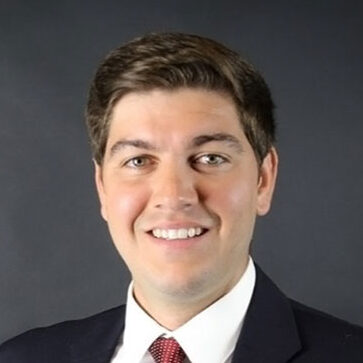
Patrick Snarr
I earned a Ph.D. in mechanical engineering from the University of Texas at Austin in May 2025 after completing dissertation research at ORNL in conjunction with the NNSA Consortium for Enabling Technology and Innovation (ETI). My dissertation research focused on multi-material ceramic additive manufacturing of novel nuclear fuel forms.
Post graduation, I serve as an R&D Assistant in the Advanced Fuel Fabrication Group in the Fusion and Fission Energy and Science Directorate at ORNL. My research interests encompass the design and manufacturing of innovative nuclear fuel forms. This includes metal and ceramic additive manufacturing techniques for light water reactor (LWR) fuel forms, as well as fabrication methods for particle fuel forms utilized in high temperature gas-cooled reactors (HTGR). My research objective is to make modern nuclear reactors more efficient to help address the growing global energy demand.