Undergrad and Post-Bachelors
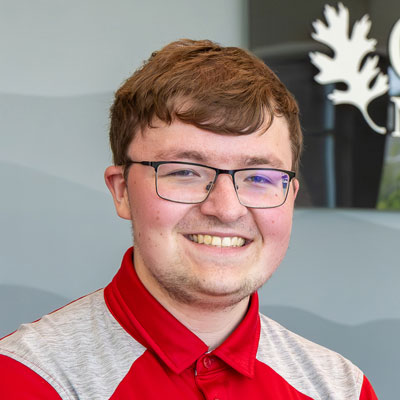
Nathan Thompson
My name is Nathan Thompson. I recently graduated with my Bachelor’s in Meteorology at the University of Oklahoma (UO), where I will also start my Master’s in Atmospheric Sciences this fall. I am a fellow of the DNN Enabling Capabilities in Technology (TecH) Consortium.
At the University of Oklahoma, I am studying methods for the remote detection of radioactive aerosols. I work on simulations of the light-scattering properties of simulated radioactive aerosols. Not much is known about these aerosols, but scenarios like the Fukushima-Daiichi nuclear accident in 2011 provide some insight. Studies showed that aerosols containing Cesium-137 released from the Fukushima plant took multiple forms. These forms included both spherical (simple) and aggregate (complex) forms. Using a few simulation programs, I study how different forms reflect and absorb light. By developing a better understanding of this, we can use instruments like satellites and lidar to detect releases of these aerosols.
Over the summer, I interned at Oak Ridge National Laboratory (ORNL) under Dr. Alyssa Alsante. Our goal was to detect and sample radioactive aerosols at the ORNL reservation. ORNL is known for its nuclear research, and although the lab is very environmentally conscious, certain releases of radioactive material are unavoidable and necessary. We planned to map radiation levels at various sites using a Radiacode portable scintillator and use a cascade impactor to sample any areas of high activity. Due to some setbacks, we were unable to get any particle samples. However, we were able to measure what we believe is the release of gaseous radioactive isotopes by experiments at the Spallation Neutron Source (SNS). I learned a lot through my experience at ORNL. I got to do fieldwork, which is something I always had interest in. I also got to design my own experiment, something I lacked the confidence to do before. As a result of this, I was also responsible for working with the data, which I had not done before since I had only worked in group settings.
I am grateful to the TecH Consortium, my mentors, and the staff at ORNL for a productive and welcoming experience. I never imagined having such an opportunity, and I couldn’t have done it without the consortium and the great people in it. As a meteorologist, I never saw an opportunity for myself at a National Lab, but I now see the possibility. Although nuclear physics is outside of my comfort zone, I learned a lot that will be useful to my research as a graduate student and beyond. I would not hesitate to intern at ORNL again, and I would certainly recommend it to peers.
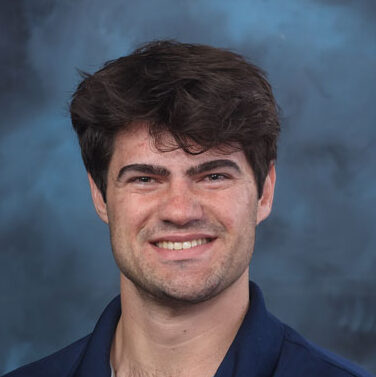
Andrew Politz
My name is Andrew Politz. I recently finished my Bachelors of Science in Nuclear Engineering at the University of California, Berkeley. I am also an undergraduate fellow of the Nuclear Science and Security Consortium (NSSC).
During summer 2025, I interned at Oak Ridge National Laboratory (ORNL) under the mentorship of Dr. Walid Metwally in the Nuclear Criticality Safety (NCS) Group. While at ORNL, I developed the simulation framework and analysis for coincidence counting experiments at the planned Oak Ridge Subcritical Assembly (ORSA). This facility contains configurable AGN-201M reactor plates and lucite reflector to train and educate the NSC community and students. My project started by developing a model of ORSA in MCNP and then reproducing Rossi-alpha coincidence measurements for both a randomly pulsed Cf-252 neutron source and deuterium-deuterium neutron generator. As a result of my research, we concluded that a DD neutron generator would be better for operation and measurement at the facility. I also demonstrated the differences between the source methods. I presented my work to the NCS Group, and I will be drafting my findings into an abstract to present to the American Nuclear Society (ANS).
My internship at ORNL has helped expand my understanding of the current research needs in reactor noise analysis. It has also helped me better focus on the topics I would like to pursue further research in; as well as areas where I would like to expand my experience working at a national laboratory.
I am grateful to the NSSC and the ORNL staff for making my internship possible and for providing me with the resources and opportunity to explore new areas of nuclear science. This opportunity has enabled me to learn about the many pathways to continue my research in the next steps of my career. My ORNL experience has been invaluable. I would strongly encourage anyone to conduct research at ORNL.
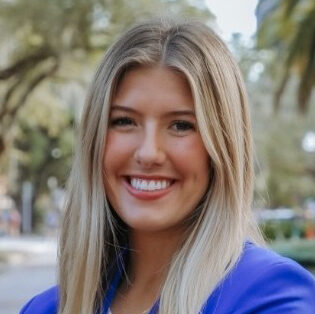
Paige Anderson
My name is Paige Anderson. I am a first-year PhD student at the University of Florida. I completed my Bachelors in Computer Science in May 2025 at the University of Florida. I joined the Optical Science and Nonproliferation Lab under Dr. Kyle Hartig during the third year of my undergraduate studies. I am continuing to support the lab under the Consortium for Nuclear Forensics (CNF) as a PhD student.
My interdisciplinary background in computer science and nuclear engineering has motivated me to pursue computational approaches to advance nuclear security research. During my undergraduate work, I contributed to projects applying machine learning and data fusion techniques to detect plutonium surrogate contamination from optical emission spectra with high accuracy. As I continue my graduate studies, I look forward to further developing computational methods to support nuclear security science.
During summer 2025, I interned at Oak Ridge National Laboratory (ORNL) under the mentorship of Dr. Katherine Royston and Dr. Gregory Davidson in the Nuclear Energy and Fuel Cycle Division. This internship allowed me to work on a rotor dynamics simulation project. Specifically, I worked on integrating a Sandia automatic differentiation package into a hydrodynamic bearing solver, which improved the accuracy of the simulation. This experience strengthened my skills in C++ software development, linear algebra, and computational science. It also has allowed me to learn how to better evaluate and contribute to complex engineering simulations. I am now returning to the University of Florida with greater confidence in my capabilities as a researcher, and with a stronger understanding of interdisciplinary nuclear research projects.
I am incredibly grateful for my experiences at ORNL and for the guidance and support I received from mentors across the lab and the CNF. This internship enhanced my technical and professional skills while exposing me to critical collaborative research. I strongly recommend the internship program to other students.
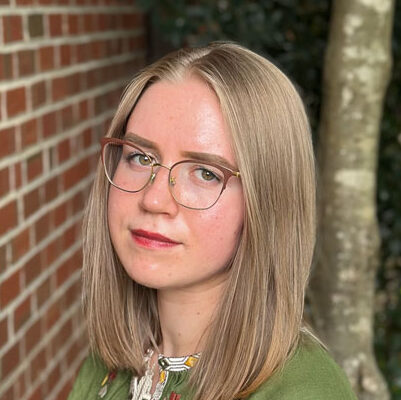
Sofiia Asadchykh
My name is Sofiia Asadchykh. I am a senior at North Carolina State University (NCSU) majoring in Nuclear Engineering in the Accelerated Bachelor’s-Master’s program. I am affiliated with the Consortium for Nuclear Forensics (CNF) and with the ARTISANS research group at NCSU led by Dr. Xu Wu. I support Dr. Wu’s CNF project on improving uncertainty quantification of nuclear data for radiation transport applications.
During summer 2025, I interned with the Incident Modeling and Computational Sciences Group of the Nuclear Nonproliferation Division at Oak Ridge National Laboratory (ORNL) under the direction of Dr. David Hooper and Bret Brickner. My assignment was to support development of the Visual Interactive Site Analysis Code (VISAC) software that has been created and maintained at ORNL. This software is mainly used to model nuclear facility accident scenarios, simulate blast effects, predict types of radiological releases and plant downtimes. One of my tasks was to conduct research to aid in adjusting the existing building models in the software to be more representative of reality. Perhaps the main result of my appointment has been the construction of simplified systems diagrams for almost all of the thermal-hydraulic subsystems of the VVER-1000 plant. I also developed event trees and the associated fault trees for the Loss of Offsite Power (LOOP) accident scenario. I was able to present my work during a research symposium that was held at ORNL on August 1, 2025. This experience was valuable for my practice of effective scientific communication and public engagement.
Overall, I am beyond satisfied with my appointment. It allowed me to not only apply the skills I have gained through my undergraduate Nuclear Engineering degree to a project with significant national nuclear security implications, but to grow immensely in a professional sense. As this internship was my first experience at a national lab, it was a unique opportunity to be surrounded by many accomplished R&D professionals, whether in the field of nuclear engineering or beyond. Through building connections with these professionals and researchers, I have a better understanding of the realities and directions of the nuclear science field as well as the advantages and meaningfulness of a research career. These things have contributed to me adjusting my goals and outlook of what I want my personal career to lead to. I would recommend an internship opportunity at ORNL for any student interested in developing proficiency with research and design practices, or a career at a national laboratory.
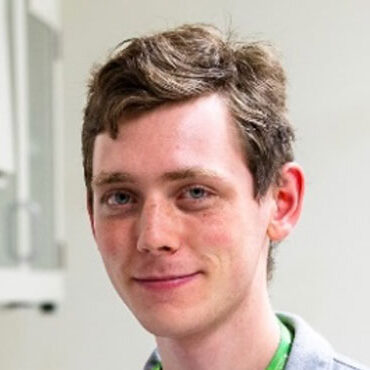
Markus Tam
My name is Markus Tam. I am a recent graduate of the University of Illinois at Urbana-Champaign (Physics, B.S.) and an incoming graduate student at North Carolina State University (Physics, Ph.D.).
Over the summer of 2024, I interned in the ORNL Nuclear Nonproliferation Division in the Verification Technologies Group under Alex Enders. My research involved the investigation of a potential portable hybrid neutron-gamma radiation detector comprised of some combination of a sodium iodide scintillating detector with sheets of Gadolinium and polyethylene. While at ORNL, I was able to tour the SNS, HFIR, and MDF facilities to learn about the areas of cutting-edge research being advanced here, such as additive manufacturing, grid energy storage, and neutron-scattering-based materials testing. I was also able to hear from more senior staff members about their career paths and day-to-day work experiences.
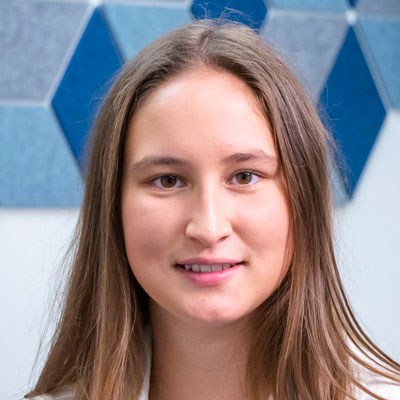
Bernadette Brezinski - University of Tennessee (NSSC Fellow)
During the summer 2022, Bernadette interned in the ORNL Nuclear Nonproliferation Division working in the Signals Collection and Analysis Group under Dr. Heath Huckaby. During her internship, Bernadette was able to perform signal processing for nuclear non-proliferation applications. Her work included the development of python code and the development of interactive plotting programs to be able to plot different frequencies on a spectrogram. She was also able to attend a conference to network with vendors to learn more about emerging technologies within the nuclear community.